What an AI Implementation Partner Actually Does For Startups and Enterprises
Published on June 6, 2026

Use AI to summarize this article
 ChatGPT
 Claude
 Grok
Grok Perplexity
 GoogleAI
Most companies arrive at AI the same way.
A founder sees a competitor launch an AI chatbot. A CTO sits through a vendor demo. A team lead gets frustrated running the same manual process for the hundredth time. Someone, somewhere, says the words: “We need to do something with AI.”
And then nothing happens. Or worse, something half-baked happens. A tool gets plugged in, nobody uses it, and the whole thing gets quietly shelved three months later.
The problem is not the technology. The technology works. The problem is that AI doesn’t implement itself. It requires someone to understand both the business problem and the technical path to solving it, at the same time.
That’s exactly what an AI implementation partner does.
This article explains what that actually means in practice, what the work looks like from start to finish, and how the approach is different depending on whether you’re a startup moving fast or an enterprise managing scale.
What an AI Implementation Partner Is (and Is Not)
An AI implementation partner is a technical team, or firm, that takes responsibility for the end-to-end process of getting AI working inside your business. Not just setting up a tool. Not just writing a strategy document. The full path from where you are today to a running, measurable system.
That includes:
- Auditing your current workflows and data
- Identifying where AI can actually add value (not just where it sounds good)
- Designing the architecture that fits your stack
- Building, training, and testing the system
- Integrating it into the tools your team already uses
- Monitoring and refining it after it’s live
This is different from an AI consultant, who typically delivers a strategy and leaves. It is different from a software development agency that builds what you spec out without questioning the brief. And it is different from a freelancer who implements one narrow task without understanding how it connects to everything else.
A real implementation partner owns the outcome, not just the deliverable.
Why Most AI Projects Fail Before They Start
This is an important thing to understand before anything else.
According to McKinsey, less than 20% of AI proof-of-concept projects make it to full production deployment. The failure is almost never because the model didn’t work. It fails at the edges, messy data, poor integration, teams that weren’t prepared for the change, and systems built in isolation from the workflows they were supposed to serve.
The most common failure patterns:
Unstructured data. AI systems learn from data. If your data lives in spreadsheets, PDFs, disconnected CRMs, and email threads, and nobody has cleaned or organised it, the model has nothing reliable to learn from. Garbage in, garbage out is not a cliché. It is a technical reality.
Tool overload without integration. Many businesses already have several AI tools running. They rarely talk to each other. Adding another tool into a disconnected stack doesn’t create automation; it creates another silo.
No internal expertise to own it. AI systems need someone to maintain them. Prompts need tuning. Models drift over time. If nobody on your team understands what was built, the system degrades silently until it stops being useful.
Starting with the technology, not the problem. This is the most expensive mistake. Choosing GPT-4 or Claude before you’ve defined what problem you’re actually solving leads to systems that are technically impressive and operationally useless.
An AI implementation partner’s first job is to prevent all four of these before a single line of code is written.
What the Actual Work Looks Like
Here is what implementation looks like when it’s done properly. These are not marketing phases; this is the actual workflow.
1. Discovery and Workflow Audit
Before anything is built, the team maps your business: how data flows, where decisions get made, which processes eat the most time, and where errors happen. This is not a quick call. It involves reviewing your tech stack, your integrations, your data sources, and the people who use all of it every day.
The output is a clear picture of where AI can realistically add value, and where it cannot. An honest partner will tell you if AI is the wrong solution for a particular problem. That conversation saves months of wasted build time.
2. Data Readiness Assessment
This is the step most vendors skip, and it’s the one that determines whether your AI system will actually work.
The team evaluates the quality, structure, and accessibility of your data. Are your documents searchable? Is your CRM data consistent? Do you have enough historical examples for a model to learn from? Are there compliance or access restrictions that affect what can be used?
If the data isn’t ready, this phase includes cleaning and structuring it. This work is not glamorous, but it’s foundational.
3. Architecture and Model Selection
Once the problem is defined and the data is ready, the team designs the system. This involves choosing the right type of AI architecture for the specific use case:
- A RAG system (Retrieval-Augmented Generation) for knowledge bases, internal search, or document Q&A
- A fine-tuned model for tasks that require domain-specific reasoning or a specialised vocabulary
- An agentic workflow for multi-step automation, routing tasks, triggering actions, sending notifications, and updating records
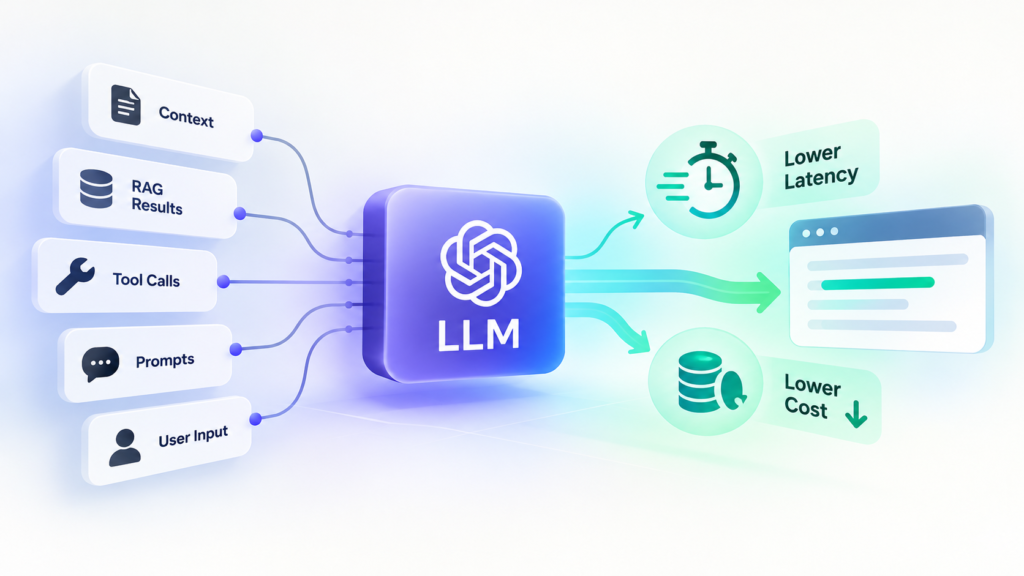
- A standard LLM integration for content generation, summarisation, or analysis tasks
The model choice matters less than the architecture choice. Picking the wrong architecture leads to a system that technically runs but doesn’t solve the actual problem.
4. Build, Integration, and Testing
This is where the system gets built and connected to your existing tools, your CRM, your internal dashboard, your customer support platform, your data warehouse, whatever is relevant.
Testing is not an afterthought. It includes edge case handling, accuracy benchmarking against real data, load testing for production traffic, and guardrails to prevent the model from returning incorrect or harmful outputs.
A production-ready system behaves predictably under real conditions, not just in a controlled demo.
5. Deployment and Monitoring
Going live is not the end, it’s the beginning of a new phase. AI systems need to be monitored after deployment. Model performance drifts. User behaviour reveals use cases nobody anticipated. Data inputs change over time.
A responsible implementation partner sets up observability, usage tracking, accuracy monitoring, error logging, and stays involved through the early weeks of production to catch problems before they compound.
AI Implementation Partner for Startups: What’s Different
Startups have a specific set of constraints that change how implementation should work.
Speed matters more than perfection. A startup that waits six months for a flawless AI system has likely missed the window. The right partner for a startup moves in sprints, ships a working version fast, and iterates from there.
Resources are limited. There’s no in-house ML team, no dedicated data engineering function, and often no internal documentation of how processes actually work. A good implementation partner fills that gap entirely, acting as the technical co-founder that never joined the team.
Technical debt is a real risk. Startups under time pressure often cut corners that become expensive later. An AI implementation partner who understands startup dynamics will build fast and build clean, choosing an architecture that won’t need to be completely rebuilt when the product grows.
The use cases are usually product-level. For startups, AI is often a core part of the product itself, not a back-office efficiency play. That means the implementation needs to be production-grade from day one, not a prototype wired together with duct tape.
What startups typically need from an AI implementation partner:
- A lean MVP architecture that can scale
- Rapid prototyping cycles with real feedback loops
- Integration with existing SaaS tools (CRMs, communication tools, databases)
- Clear documentation so the internal team can manage it after handoff
- Honest feedback on whether the AI idea is technically viable before building begins
A real example of this: when working with TK Tech, an AI automation startup in the United States, the core challenge was building a production-ready AI agent platform that could handle multi-step workflows at scale. The solution involved building a Fastify backend, integrating LangChain and LangGraph for workflow orchestration, configuring Redis for job queuing, and deploying across AWS EC2, ECS, and RDS. Seven automation tools, web scraping, search, Gmail, and Google Sheets, were integrated into a single agent system. The result was a platform that went from concept to production-ready infrastructure that TK Tech’s enterprise clients could actually rely on.
That kind of work is not something a startup does alone. It requires a partner who has already solved these infrastructure problems before.
AI Implementation Partner for Enterprise: What’s Different
Enterprise AI implementation has an entirely different set of challenges, and the stakes are higher in almost every dimension.
Existing infrastructure is complex. Enterprise companies already have years of tools, integrations, and data architecture in place. AI cannot be dropped on top of this. It needs to be woven into it carefully, which requires a deep understanding of how the existing systems work.
Security and compliance are non-negotiable. For regulated industries, such as finance, healthcare, and legal, every component of the AI system needs to be assessed against compliance requirements. Data access needs to be controlled at a granular level. Audit trails are mandatory. Encryption standards need to be enforced.
Adoption is a change management problem. The technology is often the easier part. Getting teams of 50, 500, or 5,000 people to actually use the system is where enterprise AI projects stall. An implementation partner who only delivers the technical build and disappears has not actually delivered a solution.
The ROI needs to be measurable. Enterprise decisions require business cases. A good partner defines success metrics before building starts, tracks them during deployment, and reports on them honestly after go-live.
What enterprises typically need from an AI implementation partner:
- A formal audit of existing data infrastructure and integration points
- Multi-tenant architecture if the system serves multiple business units
- Role-based access controls, encryption, and security from the ground up
- Integration with enterprise systems: ERP, CRM, data warehouses, HR platforms
- A phased rollout plan that reduces disruption
- Post-launch support with documented SLAs
A real example: one enterprise project involved building a multi-tenant AI business intelligence platform that converted raw financial data into structured, queryable insights. The challenge was that the financial data arrived in five different file formats, CSVs, Excel exports, PDFs, scanned documents, and JSON. The solution included a three-layer architecture: an ingestion pipeline with virus scanning and version control, an AI cleaning engine that standardised formats, detected anomalies, and generated audit reports, and a conversational analytics layer that let users query the cleaned data in plain English.
The architecture was deployed on AWS with row-level security, AES-256 encryption, and tenant isolation baked into the database layer from day one. This is what “enterprise-ready” actually means, not a checkbox, but a series of design decisions made before the first line of code is written.
Startup vs. Enterprise: The Key Differences at a Glance
| AI Implementation for Startups | AI Implementation for Enterprise | |
|---|---|---|
| Primary goal | Speed to market, lean MVP | Security, integration, adoption |
| Timeline | Weeks to first working version | Months, phased rollout |
| Data challenge | Often sparse, poorly structured | Often siloed, governance-heavy |
| Integration | SaaS tools, APIs | ERP, CRM, legacy systems |
| Security | Basic best practices | Compliance-grade, auditable |
| Success metric | Reduction in manual hours, product feature live | ROI measurement, team adoption rate |
| Post-launch | Handoff with documentation | Ongoing monitoring and SLA |
How to Know If You Actually Need an AI Implementation Partner
Not every problem requires a partner. Some problems are genuinely solved by an off-the-shelf tool. But there are specific signals that mean you need more than a tool.
You need a partner if:
- You’ve tried an AI tool, and it didn’t stick because it couldn’t connect to your actual data or workflows
- You’re spending more than 15–20 hours a week on a manual process that follows a consistent pattern
- You have internal data that contains answers your team keeps searching for manually
- Your product roadmap includes an AI feature, but nobody on the team has shipped one before
- You’re moving into a regulated space and need AI that’s auditable and secure
- You’ve had an AI pilot that worked in the demo, but never made it to production
You probably don’t need a partner if:
- You need a chatbot, and your support conversations are simple and short
- You want to generate marketing copy, and a standard LLM API call handles it fine
- You’re experimenting internally with no timeline or business goal attached
The distinction matters because the wrong partnership, hiring an implementation team when you needed a plugin, wastes money and time in both directions.
What to Look for When Choosing One
Since there are now hundreds of agencies describing themselves as AI implementation partners, here is how to evaluate them honestly.
Ask for production examples, not demos. A demo can be built in a weekend. Ask to see a system that has been running in production for six months or more. Ask what challenges came up after launch. If they can’t answer that question specifically, they haven’t shipped enough to know.
Check whether they start with strategy or with technology. A partner who opens the first conversation by recommending a specific model or tool before understanding your business is selling, not solving. The right partner starts with your workflows and works backwards to the technology.
Understand who does the actual work. Some firms sell projects at a senior level and deliver them with junior contractors. Ask directly: who will be working on this project, and what have they shipped before?
Evaluate their integration experience. AI that can’t connect to your existing systems creates isolation, not automation. Ask specifically which CRMs, ERPs, or data systems they’ve integrated with, and how.
Assess their post-launch behaviour. The real test of a partner is not the launch. It’s what happens when something breaks two months later. Understand what support looks like and whether it’s structured.
What Byteonic Labs Does as an AI Implementation Partner
At Byteonic Labs, this is exactly what we do, and it’s the only thing we do.
We work with startups that need AI built into their product or operations without creating a mess they’ll spend the next year untangling. And we work with growing companies and enterprises that need AI that integrates cleanly with their existing stack, meets security requirements, and gets adopted by the teams using it.
Every engagement starts with a discovery conversation and a data audit, because the real constraint is rarely the AI model. It’s the readiness of the environment it’s going into.
If there’s a clear opportunity, we design the architecture, build the system, integrate it, test it against real conditions, and monitor it after deployment. We don’t hand over a prototype and disappear.
If there isn’t a clear opportunity, we’ll tell you that upfront, before any money changes hands.
If you’re evaluating whether an AI implementation partner is the right move for your business, the fastest way to find out is a direct conversation. No sales script. Just a working discussion about where you are and whether we can help.
Book a strategy call with Byteonic Labs →
Published by Byteonic Labs, an AI Implementation Partner for startups and enterprises. | hello@byteoniclabs.com
An AI implementation partner is a technical team that handles the full process of building and deploying AI inside a business, from auditing existing data and workflows to designing, building, integrating, and maintaining the system in production.
An AI consultant typically delivers strategy and recommendations, then exits. An AI implementation partner takes responsibility for actually building and deploying the system and ensures it works in production, not just on paper.
For a focused startup project with a defined scope, a working system can be in production within 4–8 weeks. Enterprise implementations with complex integrations and phased rollouts typically take 3–6 months. Timeline depends primarily on data readiness and the complexity of existing systems.
You need a defined business problem, access to the relevant data sources, and internal stakeholder alignment on the goal. You don't need a prepared dataset or a technical team; a good partner helps you structure both.
For startups, the focus is speed, lean architecture, and building AI that is production-grade from day one without accumulating technical debt. The emphasis is on working systems, fast iteration, and clear handoff documentation.
For enterprise, the focus shifts to security, compliance, integration with complex existing systems, and team adoption. Enterprise implementations require more discovery upfront, stricter architecture decisions, and post-launch monitoring with documented SLAs.
The clearest signal is a repeatable manual process that follows consistent rules and consumes a significant amount of team time. If your team performs the same sequence of steps every day, routing data, searching documents, drafting responses, and generating reports, that pattern is a strong candidate for AI implementation.